September 20, 2026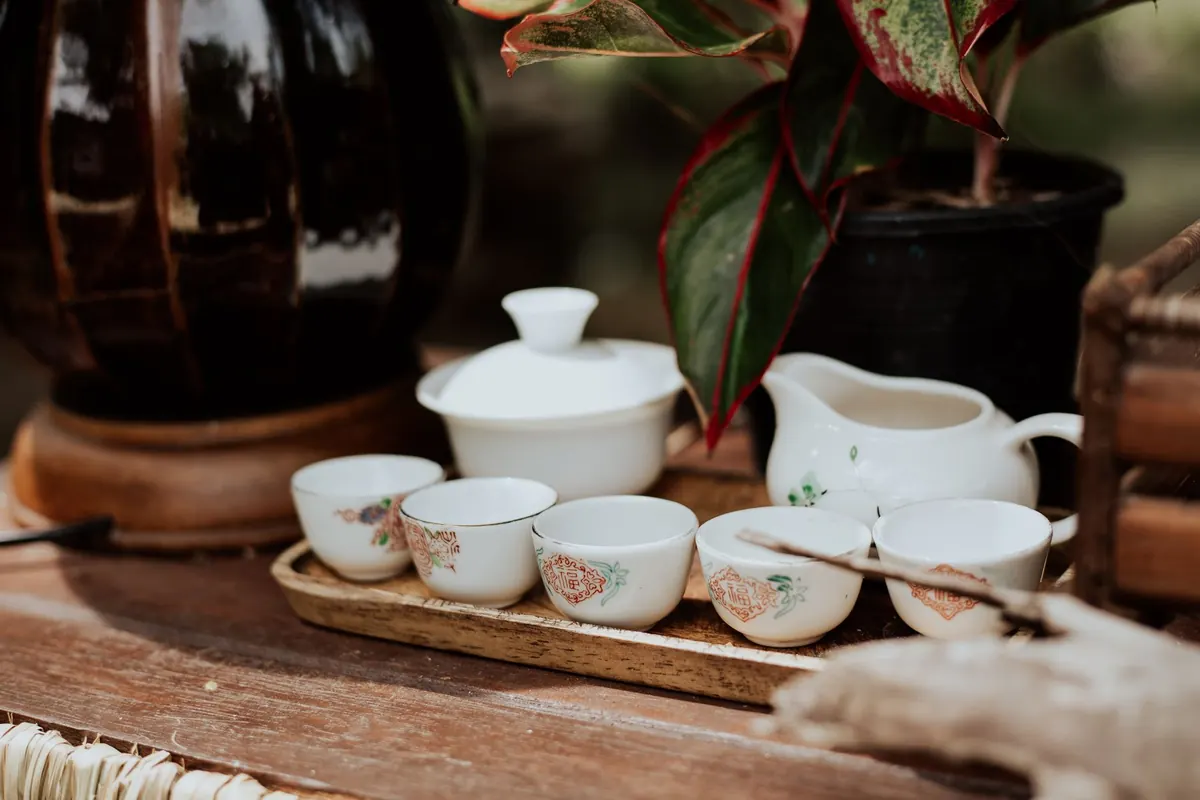
Most people buy their first proper teacup the way they buy a winter hat: they spot one they like, try it on for four seconds, and head to the till. A month later they notice the cup is too small for their morning pot, or the rim is thick enough to make every sip feel like drinking from a soup spoon. A teacup is a tool you use daily, and small differences in size, shape, material, and rim change how it works. Here is what to check before you pay.
Start With Capacity, Not Looks
Capacity is the decision that most often goes wrong, because it is invisible on a shelf. A cup looks generous next to a teapot and turns out to hold barely two mouthfuls. Before you shop, pour your usual tea into a measuring jug, or fill a mug you already like and tip it into the jug. That number is your target.
Rough ranges for orientation:
- 50–70 ml: gongfu-style sessions with many short infusions, drunk in two or three sips.
- 100–150 ml: a solo cup for Chinese or Japanese tea, where you expect to refill.
- 180–250 ml: a Western-style serving, with room for a long steep or a splash of milk.
- 300 ml and up: honestly a mug. Nothing wrong with that, as long as you know it is what you are buying.
Then apply the fill line. Nobody fills a cup to the brim, because you would burn your fingers and slop tea on the table. In practice you use about seventy to eighty percent of the stated volume, so a 200 ml cup gives you roughly 150 ml of drinkable tea. If you brew a 300 ml pot for two people, two cups of 150 to 180 ml each are a better match than two delicate 90 ml cups that leave half the pot stranded.
The Rim Does Quiet Work
The rim is where a cup either disappears into the experience or reminds you it exists. Run your fingertip around the edge. It should feel smooth and even, with no thin patches in the glaze and no chip catching your skin. A tiny chip on the rim is not cosmetic; it is exactly where your lip lands.
Thickness matters more than most beginners expect. A thin rim delivers tea to your tongue quickly, which suits light greens and delicate oolongs. A thick rim acts like a small ledge, and the liquid arrives slower and warmer, which can feel comforting with a malty black tea or a roasted oolong but clumsy with anything subtle. Flare matters too. A rim that curves outward spreads the tea across a wider part of your mouth and cools it slightly on the way in. A rim that tucks inward concentrates the flow into a narrow stream, which some drinkers love and others find aggressive.
The opening also shapes aroma. A narrow mouth gathers scent upward, so you smell the tea before you taste it. A wide mouth releases aroma broadly and cools the surface faster. Choose narrow for aroma-driven teas, wide if you like your tea to be drinkable sooner.
Material Changes Flavor, Heat, and Weight
Four materials cover nearly every cup you will meet, and each behaves differently.
Porcelain and bone china
Glazed, non-porous, and neutral. They take on no flavor from previous teas and give none back, which makes them the safe choice for anyone drinking several types of tea in a week. Porcelain can be thrown very thin, so it feels light against the lip. Bone china is lighter still and holds a pale tea's color beautifully.
Stoneware and unglazed clay
Stoneware is heavier, holds heat longer, and feels sturdy in a way porcelain does not. Unglazed clay is porous and absorbs oils from the leaf, which is either a feature or a problem depending on your habits: a clay cup dedicated to one tea family develops a seasoned character over time, but it will muddle flavors if you brew everything in it. Keep clay for a specific tea and it rewards you. Use it as an all-purpose cup and it will not.
Glass
Glass shows the leaf, the color, and the clarity of the liquor, which makes it excellent for learning how a tea behaves. It loses heat faster than clay or stoneware, so it suits teas you want to watch as much as drink.
Shape, Balance, and the Hand Test
An empty cup tells you almost nothing. Hold it filled with water at the weight you will actually be carrying, and notice where the balance sits. A cup with a small foot and a wide belly can feel tippy once it is full. A tall narrow cup may look elegant but tip easily on a crowded tray. Set it down and nudge it gently; a wobble now is a spill later.
Handle or no handle
A handle needs to take two fingers comfortably, not pinch one. If your knuckles touch the hot body of the cup, the handle is decorative. Handleless cups are held by the rim with thumb and forefinger, or cradled in the palm, and they work well when the wall is thick enough or the tea is poured at a temperature you can hold. Check that the body does not conduct heat through to your fingers after a minute of contact.
Fit and stacking
Measure the height against your teapot spout, your tea tray, and your shelf. If the cups are meant to nest, stack two in the shop and see whether they jam. Cups that stick together are a small daily irritation.
The Ten-Second Checklist
Use this in the shop, or at the kitchen table before you keep an online order.
- Fill it with warm water and drink. The lip test beats every description.
- Weigh it full in your hand for thirty seconds. Comfortable, or already heavy?
- Check the rim for chips, rough glaze, and uneven thickness.
- Nudge it on a flat surface. No rock, no spin.
- Insert two fingers through the handle and confirm clearance.
- Tilt it as far as you would need to for the last sip. Does your nose hit the far rim?
- Ask whether it is dishwasher and microwave safe, and believe the answer.
Buy One First, Then Commit
Resist the matched set on your first purchase. Buy a single cup, take it home, and use it with the tea you drink most for a week. You will learn things no product page tells you: whether the rim suits your mouth, whether the capacity leaves you wanting a refill too soon, whether the handle annoys you at seven in the morning.
Then buy the rest. If you want a set for guests, choose the size that fits your largest teapot divided by the number of people you usually serve, minus a little for what the leaves absorb. If you drink alone, two good cups in the same size are more useful than six mismatched ones, because you can rotate them while one dries.
One last practical note: a cup that holds heat well also holds it against your lip. Give a fresh pour a minute before you drink, especially with a thick-walled clay or stoneware cup. The best teacup is not the most beautiful one on the shelf. It is the one you reach for without thinking, and that you would buy again if it broke.
Photo: cottonbro studio / Pexels